
Is there anything wrong with eating eggs from 'happy' chickens that are free?
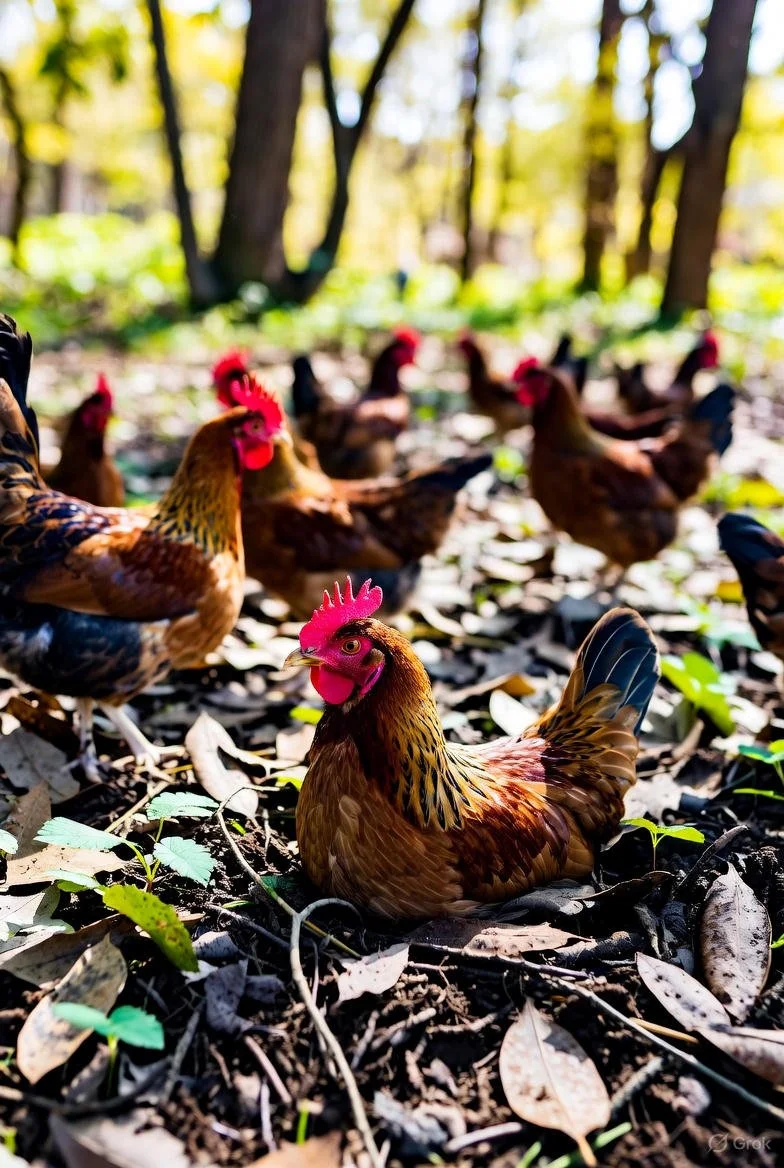
What happens when feral chickens lay eggs in the wild?
The setting
Chickens seek out concealed spots like dense brush, leaf litter, or ground depressions to lay eggs, often 1 per day during peak seasons.
Their nests are usually a shallow scrape with some vegetation for camouflage. Unlike dedicated incubators, hens may only cover eggs lightly with leaves or feathers if disturbed.
What happens to these eggs?
Without a rooster nearby, the vast majority of eggs remain unfertilised, which means that they won’t hatch.
Foxes, rats, snakes, raccoons, birds of prey or even wild pigs devour them whole. Studies on feral populations show 70-90% of eggs are lost to predators before hatching.
Rain, flooding, or heat can crack or spoil them.
Scavenging insects (ants, beetles) may also infest them.
If we crack the eggs open for them, the chickens will eat them.
What happens to the eggs that are fertilised in the wild?
Hens don't guard unfertilized eggs aggressively; they might leave the nest to forage, exposing eggs to theft or damage. However, if a rooster is present and if the egg is fertilised, the hen will incubate it for 21 days. She will turn the eggs periodically and cluck to defend the nest.
So would I eat eggs that have been laid in the wild?
I wouldn’t, and here’s why
I have enough access to a range of consumables and have been more than fine, since I stopped eating eggs in 2008
My body doesn’t need eggs
Other beings can benefit from them
Related content
“Don’t do nothing because you can’t do everything. Do something. Anything.”